
Shaping the "New Standards" in Payments through NP Engineering
In the age of AI, the potential of engineers is greater than ever. What we value most is elevating our technical expertise and building systems that continuously generate value.
By demystifying the complex domain of payments and building upon our proprietary data and platforms, we leverage our ability to create trust to build social infrastructure that will become the "new standards."

Guided by the mindset of a "Business Architect"—designing businesses from their structural core—we conceptualize technical strategies and systems that carve out the future of our business.
A culture that transcends the boundaries of department and domain, encourages independent thinking, and respects individuality empowers us to break new groundEngineers themselves are redefining what engineering can be.

While Buy Now Pay Later (BNPL) services may appear simple at a glance,behind every transaction lies a complex interplay of credit screening , billing, payment matching, merchant settlement, and compliance with relevant laws and regulations. Unlike other payment methods, the BNPL mechanism itself is a financial domain dealing with "trust," requiring both absolute accuracy and speed simultaneously.
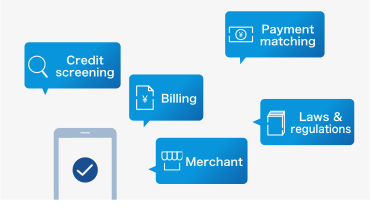
We have been tackling this domain since the launch of "NP Atobarai" in 2002. Ensuring continuous system uptime is a fundamental prerequisite for payment infrastructure, constantly challenging us to make architectural decisions that balance robustness and scalability. From handling diverse operational workflows for each merchant to maintaining continuous adaptation to legal revisions, we have steadily unraveled this intricate domain step by step, discerning which areas should be standardized and which should be uniquely refined.
Through these efforts, we have built a mechanism and supporting data that allow people and businesses to transact with mutual trust. With over 650 million cumulative transactions, 15 million annual users, and 850,000 merchant partners, we have established a proprietary credit model independent of credit bureaus. While delivering a smooth payment experience to many, we have constructed a network expanding across both buyers and sellers.
Our next challenge is not to keep these systems and data confined within the boundaries of payments alone. Accumulated credit data is extending to transactions and businesses where credit has traditionally been hard to reach. Money flows visible through payments are evolving into financial functions that support cash flow. Purchasing data is transforming into promotional mechanisms that connect buyers and sellers. The domains we tackle are expanding steadily.
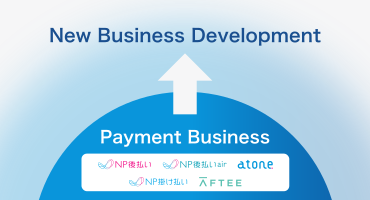
The option of Buy Now Pay Later did not always exist in the world. It was us who turned it into a standard. Using the systems and data for creating trust that we have accumulated over 20 years, what kind of "new standards" will we create next? Beyond unraveling complexity, we confront that very question.
Our technical organization is supported by the perspective of a "Business Architect" and solid technical skills.
These are not separate roles or departments; they are qualities that coexist within every single engineer.
The Business Architect perspective goes beyond conventional engineering: it means understanding business growth strategies and operational flows, designing systems and product structures to bring them to life.

The capability to view the complex payment domain not from a use-case starting point, but structurally as a product, conceptualizing technical strategies and architectures with a bird’s-eye view of the entire business.

The ability to pursue technical mastery and support structures through precise design and implementation.
The capability to deeply engage with architectures and foundational technologies, continuously sharpening the robust technical skills that support our business.
There is no superiority or inferiority between these two. Whether you lean toward a business-oriented perspective or excel at pushing the boundaries of technology, the balance between the two varies for each individual. Rather than fixing roles and evaluations, our organization enables people to expand their careers by shifting this balance according to their desired domain of challenge, personal strengths, and interests.
By embracing both business and technical perspectives, we can conceptualize systems that pioneer the future of our business and bring them to life with robust technology.
The high degree of autonomy allowing individuals to conceive and act beyond the boundaries of departments and role, combined with the psychological safety to openly exchange opinions, creates a unique cultural characteristic of our teal organization focused on autonomy, decentralization, and collaboration. Because of this environment, engineers—whether new graduates or mid-career hires, with strengths leaning toward business or technology—stand fearlessly on the front lines, leading technical challenges with their own hands.
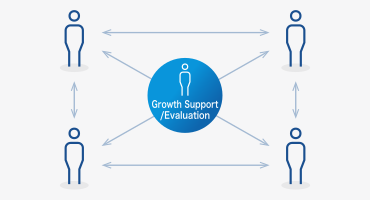
Through a culture that encourages challenges regardless of seniority and opportunities to speak at external conferences, we share insights gained from the field with the wider world. This goes beyond individual growth, contributing to the enhancement of our overall technical presence.
We are advancing sophisticated AI implementation not only for individual process efficiencies, but across the entire value chain, alongside cross-functional foundations that support it. AI is not merely a tool for efficiency; it is an integral part of the structure that generates value.
We have moved past the stage of individual usage into a phase where we are actively restructuring operational flows, products, and the foundational systems that support them.
Going beyond individual process efficiencies, we are advancing AI applications across each stage of the BNPL operational process. This includes credit and fraud detection incorporating machine learning, streamlining loan screening via generative AI-OCR, utilizing generative AI for customer support inquiries related to billing and collections, and optimizing segment-based collections combining AI-driven data analysis with our proprietary credit scoring. We embed AI optimally into each phase, transforming the entire value chain into an AI-driven structure.
In building new products, we independently expand and practice the AI-Driven Development Lifecycle (AI-DLC) advocated by AWS. Rather than simply adding AI to existing development methods, we redesign planning and development processes from scratch with AI as a prerequisite. Rethinking business intent, organizing it into requirements, breaking it down into actionable work units, and generating designs and code—AI leads this flow, while humans concentrate on "verification" and "irreversible decision-making." In domain modeling as well, AI generates draft requirements and domain models, creating a process where humans can focus entirely on model consensus-building.

As implementation speed increases through AI,the workload required to maintain quality keeps growing. We are automating error monitoring detection, investigation,
and report creation with AI, transitioning to a system where humans can concentrate entirely on "judgment." Alongside this, we are working on creating "information assets that AI can easily handle." For example, we have built a system to develop and operate compliance policy documents, utilizing AI to structure them. This enables us to establish a framework that guarantees quality without requiring proportional headcount increases as documents grow.
For us, technical investment is not a cost, but a strategic investment to drive business growth. We continuously question whether current system structures can adapt to future businesses, strengthening our investments from a medium- to long-term perspective.
Systems that have grown complex through years of operation restrict business options through performance bottlenecks and escalating maintenance costs. Continuing to support ever-expanding transaction volumes while meeting increasingly sophisticated security requirements cannot be achieved merely by adding features; it requires questioning the structure itself. Since payment infrastructure can never be stopped, we systematically execute migrations to new foundations while maintaining business quality. We advance legacy modernization by maximizing the use of cloud and AI, carefully discerning which areas to rebuild and which to maintain in their current structural quality.
NP has continued to grow by repurposing mechanisms built for one business into the next. Whether it is enhancing credit systems, optimizing and separating billing structures, or unifying member platforms, newly applied concepts and constructed mechanisms are continuously leveraged in subsequent businesses. That is why we do not view such structural reform investments as isolated events, but are mindful of a chain where a single modernization creates the next business. Which areas to separate, and which to integrate—we constantly re-evaluate whether these choices lead to structures capable of adapting to future businesses.
What we have accumulated over 20 years is transaction data exceeding 650 million records, its underlying data infrastructure, and a Teal organization capable of leveraging them autonomously, decentrally, and at high speed. What drives the utilization of these assets is our investment in Data × AI. As we transition toward a decentralized model where each business manages its own data and shares necessary information mutually, we are reinforcing our data utilization infrastructure to operate under a shared structure between humans and AI.
To enhance the execution capability of these investments, specialized functions such as AI, security, and technical organization development are organized independently and strengthened across business lines. These investment decisions are continuously discussed as core corporate strategy, positioned not as transient initiatives, but as the foundation supporting sustainable business growth.


OFFICIAL ACCOUNT